Dental Implants vs. Dental Bridges: Which Tooth Replacement Option Is Better?
A missing tooth can affect more than your smile. It may change how you chew, alter your bite, and allow nearby teeth to shift. Two common fixed replacement options are dental implants and dental bridges.
Both restore function and appearance, but they work differently. An implant is anchored in the jawbone and supports a crown. A traditional bridge uses the teeth beside the gap for support. The better choice depends on your oral health, bone level, budget, treatment timeline, and long-term goals.
Patients in Winter Springs, Oviedo, Casselberry, Chuluota, and surrounding areas can visit Collins Dental for a personalized assessment.
Dental Implant vs. Dental Bridge: Quick Comparison
| Factor | Dental Implant | Dental Bridge |
| Support | Anchored in the jawbone | Supported by nearby teeth |
| Surgery | Required | Usually not required |
| Nearby teeth | Usually left untouched | Often reshaped for crowns |
| Treatment time | Longer because healing is needed | Usually faster |
| Bone support | Helps maintain jawbone stimulation | Does not replace the tooth root |
| Cleaning | Similar to a natural tooth | Requires cleaning underneath |
| Initial cost | Often higher | Often lower |
| Best suited for | Independent tooth replacement | Faster, nonsurgical treatment |
What Is a Dental Implant?
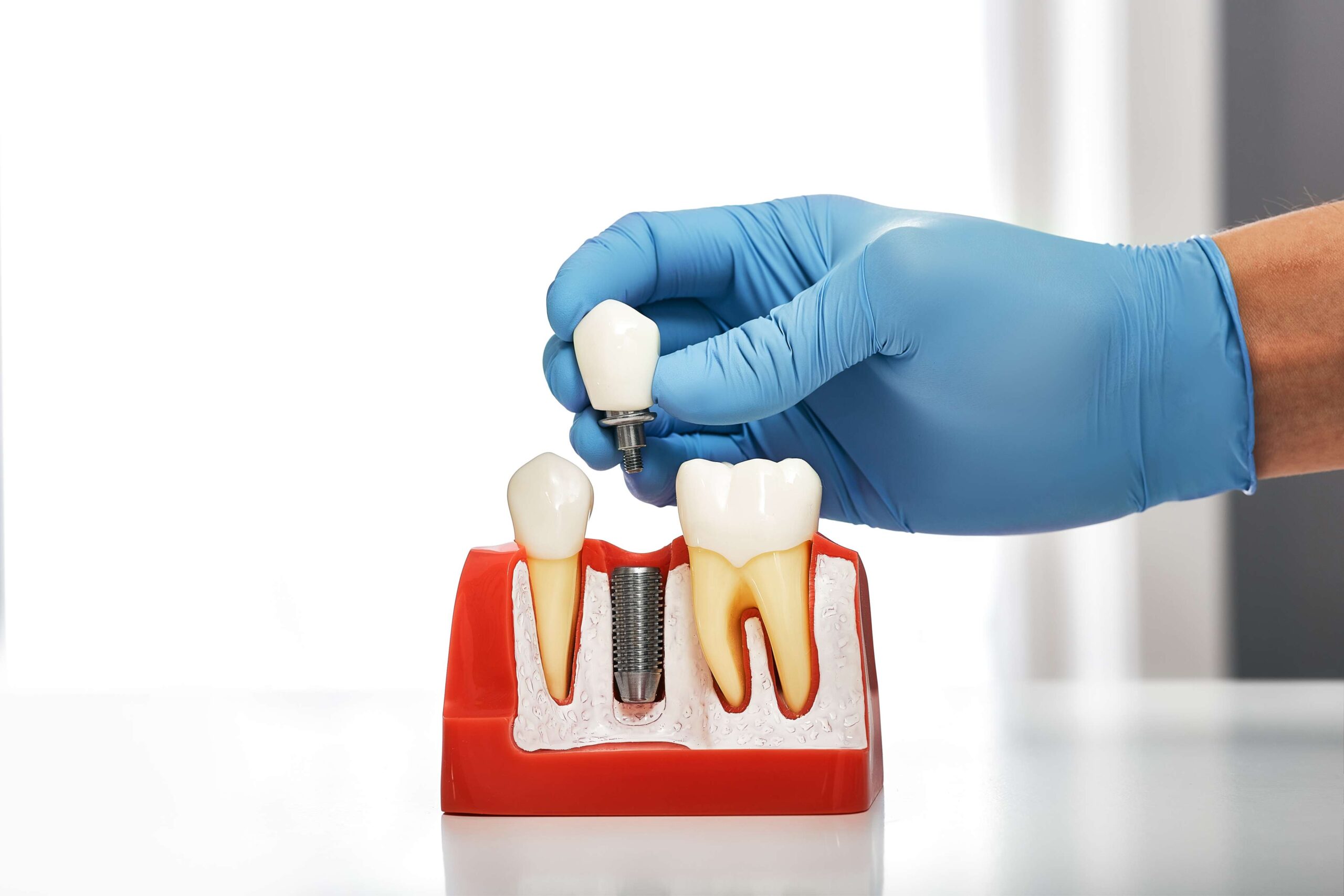
A dental implant is a small titanium post placed into the jawbone. It acts as an artificial tooth root. After it heals, an abutment and crown are attached.
Because the implant stands independently, healthy neighboring teeth usually remain untouched. It also replaces the missing root structure, helping maintain stimulation in the surrounding jawbone.
Learn more about dental implants in Winter Springs.
Implants may suit patients with healthy gums, sufficient bone, good oral hygiene, and medical health that supports healing. Bone grafting may be recommended when there is not enough bone to support the implant.
What Is a Dental Bridge?
A dental bridge fills the space left by one or more missing teeth. A traditional bridge includes an artificial tooth connected to crowns placed over the teeth on either side of the gap.
The supporting teeth are prepared so the bridge can fit securely. Unlike a removable denture, it stays fixed in the mouth.
Explore the dental crowns and bridges available at Collins Dental.
A bridge may be practical when nearby teeth already need crowns or when faster treatment is preferred.
Key Differences Between Implants and Bridges
Effect on Nearby Teeth
A single implant usually leaves adjacent teeth untouched. A traditional bridge depends on neighboring teeth for support, so they are generally reshaped for crowns.
This may be a reasonable approach when those teeth are already damaged, heavily filled, or likely to need crowns. When the adjacent teeth are healthy, preserving their natural structure may favor an implant.
Jawbone Health
A natural tooth root stimulates the jawbone during chewing. After tooth loss, the bone in that area may gradually shrink.
An implant replaces the root and helps maintain bone stimulation. A bridge replaces the visible tooth but does not extend into the jawbone.
Bone levels are only one part of treatment planning. Gum health, bite pressure, oral hygiene, and overall health must also be assessed.
Treatment Time
A bridge is generally completed faster. Treatment often includes preparing the supporting teeth, taking scans or impressions, placing a temporary bridge, and fitting the final restoration.
Implant treatment takes longer because healing is required. Depending on the patient, it may involve extraction, bone grafting, implant placement, healing, and crown placement.
Patients who want the shortest treatment timeline may prefer a bridge. Those focused on preserving nearby teeth may decide that the additional healing time for an implant is worthwhile.
Cost
Implants often have a higher upfront cost because treatment may include surgery, imaging, an implant post, an abutment, and a crown.
Bridges may cost less initially, but the final amount depends on the number of teeth involved, materials used, and the condition of the supporting teeth. Patients can review Collins Dental’s office fees and payment information before treatment.
The initial price should not be the only consideration. Future repairs, replacement needs, and possible treatment to supporting teeth can affect the long-term value of either option.
Lifespan and Maintenance
Both options can last for many years with good home care and regular dental visits. Longevity depends on gum health, bite pressure, smoking, teeth grinding, diet, and oral hygiene.
An implant crown may eventually need replacement even when the implant post remains stable. With a bridge, decay or damage affecting one supporting tooth may affect the entire restoration.
Implants are cleaned much like natural teeth. Bridges require floss threaders, interdental brushes, or a water flosser to remove plaque and food from underneath the replacement tooth.
Neither treatment is maintenance-free. Regular examinations allow the dentist to monitor the restoration, gums, supporting teeth, and bite.
Which Is Better for One Missing Tooth?
For one missing tooth surrounded by healthy teeth, an implant is often preferred because it replaces the tooth without reducing adjacent teeth.
A bridge may be better when neighboring teeth already need crowns, implant surgery is not recommended, bone grafting is not desired, or a shorter treatment process is important.
The position of the missing tooth also matters. A front tooth requires careful cosmetic planning, while a back tooth must withstand stronger chewing forces. Gum shape, available bone, bite alignment, and the condition of nearby teeth can all influence the recommendation.
Dental Implants and Bridges in Winter Springs, FL
There is no universal winner in the dental implant versus bridge comparison.
An implant may be better when preserving healthy neighboring teeth, replacing the tooth root, and maintaining jawbone support are priorities. A bridge may be better when treatment speed, avoiding surgery, or restoring damaged adjacent teeth matters more.
The final decision should follow a dental examination, imaging, and a review of your gums, bone, bite, medical history, and personal goals. Collins Dental can compare both treatments and recommend an option based on your individual needs rather than offering the same solution to every patient.
Frequently Asked Questions
1. Is an implant better than a bridge?
An implant often preserves adjacent teeth better, while a bridge may provide faster treatment.
2. Which option is completed faster?
A dental bridge is usually completed faster because implant healing is not required.
3. Is a bridge cheaper than an implant?
A bridge often costs less initially, but long-term maintenance should also be considered.
4. Do implants last longer than bridges?
Implants may offer greater long-term durability, although results depend on health and oral care.
5. Does a bridge affect nearby teeth?
Yes, supporting teeth are usually reshaped so crowns can fit over them.
6. Can one implant replace one missing tooth?
Yes, a single implant and crown can replace one tooth without relying on adjacent teeth.
7. Can I get an implant if I have bone loss?
Possibly, although bone grafting or another preparatory treatment may be recommended.
8. How do I choose between an implant and a bridge?
A dentist should assess your bone, gums, nearby teeth, budget, health, and treatment goals.